Luxury net-zero townhomes near completion in Old Town
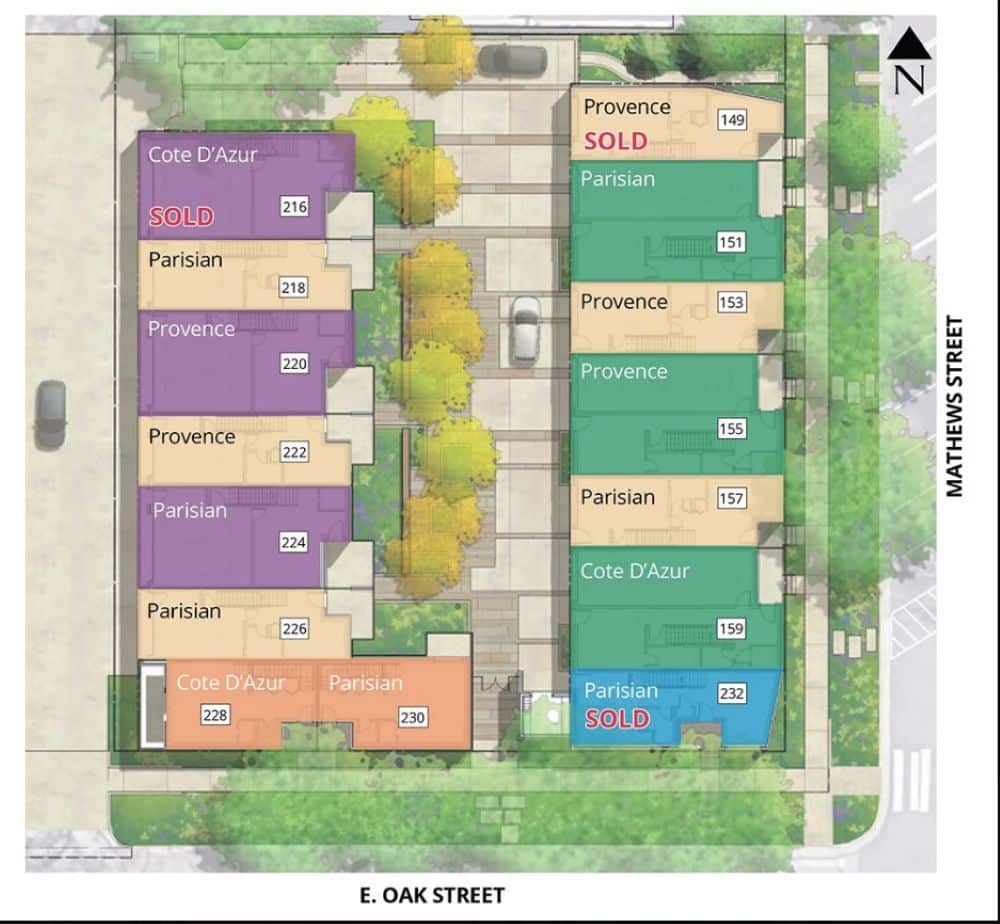
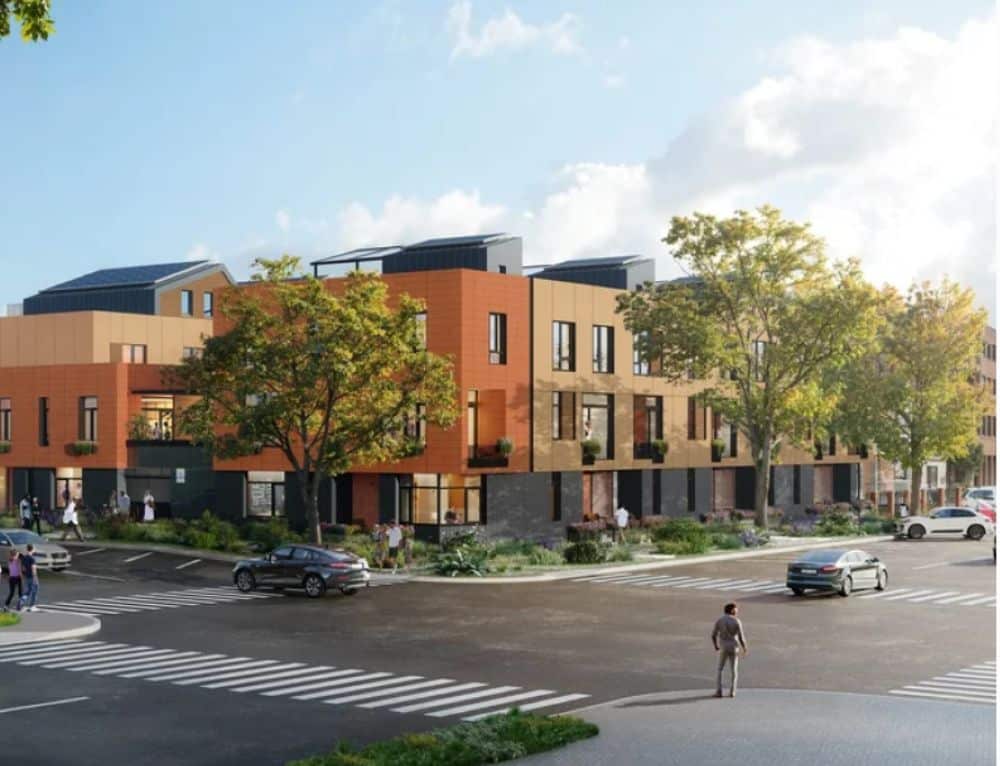
FORT COLLINS — La Vie Lumière, a collection of 15 two-, three- and four-story luxury townhomes in Old Town Fort Collins that were designed in a European spirit and aiming for a net-zero footprint, is expected to be completed by late January or early February, its developers say.
The project, at 220 E. Oak St., adjacent to Library Park, broke ground last summer. Designed by Laurie and Bob Davis of Davis Davis Architects — the same team behind L’Avenir, the townhome community directly across Oak Street — units at La Vie Lumière will range from approximately 1,500 to 3,000 square feet and sell from the upper $800,000s to the mid-$2 millions. The larger townhomes will include in-unit elevators and rooftop patios, said Tricia Diehl, part of the development team.
Nearing retirement, the Davises were joined on the project by Fort Collins-based [au]workshop: Architects + Urbanists. Denver-based Shaw Construction is the general contractor.
The project’s half-acre site at the northwest corner of Oak and Matthews streets had been home to Fort Collins’ Community of Christ church and is just west of Fort Collins Mennonite Fellowship.
The project incorporates design philosophies shaped by the Davises’ European education and travel experiences. Laurie had a fellowship at the American Academy in Rome and Bob studied Danish architecture at The Royal Danish Academy in Copenhagen.
La Vie Lumière is a French term that means both “living in light” and “living lightly.” and the project aligns with Fort Collins’ “Our Climate Future” plan, which aims to achieve carbon neutrality by 2050 through initiatives to greatly reduce greenhouse-gas emissions, reach 100% renewable electricity use and achieve zero landfill waste by 2030.
The townhomes will feature floor-to-ceiling French windows and 10-foot ceilings to allow more light in, 14-inch-thick walls packed with rockwool insulation, and an energy-recovery ventilator that continuously exchanges stale indoor air with fresh outdoor air while transferring thermal energy between the airstreams.
Ten of the 15 units are designed to be completely net-zero in their energy use.